Why Smart AI Builders Focus on Response, Feedback Loops, and Lovable Tests
In this Office Hours Insight session, Leigh-Anne Nugent shares a powerful reflection on what AI should actually help leaders do: not just spot change, but respond to it with more clarity, speed, and creativity. From strategic monitoring to minimal lovable products and customer feedback loops, this conversation is a practical guide for building smarter in an AI-driven world.
LESSONS YOU CAN TAKE FROM THIS:
1. AI should help leaders respond, not just react
One of the biggest ideas in this session is that AI can act like an early signal system, helping leaders see patterns, threats, and shifts before they become bigger problems. But the real advantage is not awareness alone. It is building the ability to respond well, with calm, clarity, and better decision-making.
2. The future belongs to collaborative intelligence
Leigh-Anne highlights a smart division of labor: AI can handle pattern recognition, anomaly detection, and constant monitoring, while humans stay focused on meaning, ethics, empathy, and creativity. That is where AI becomes most valuable, not as a replacement for leadership, but as a partner that creates more mental space for high-value thinking.
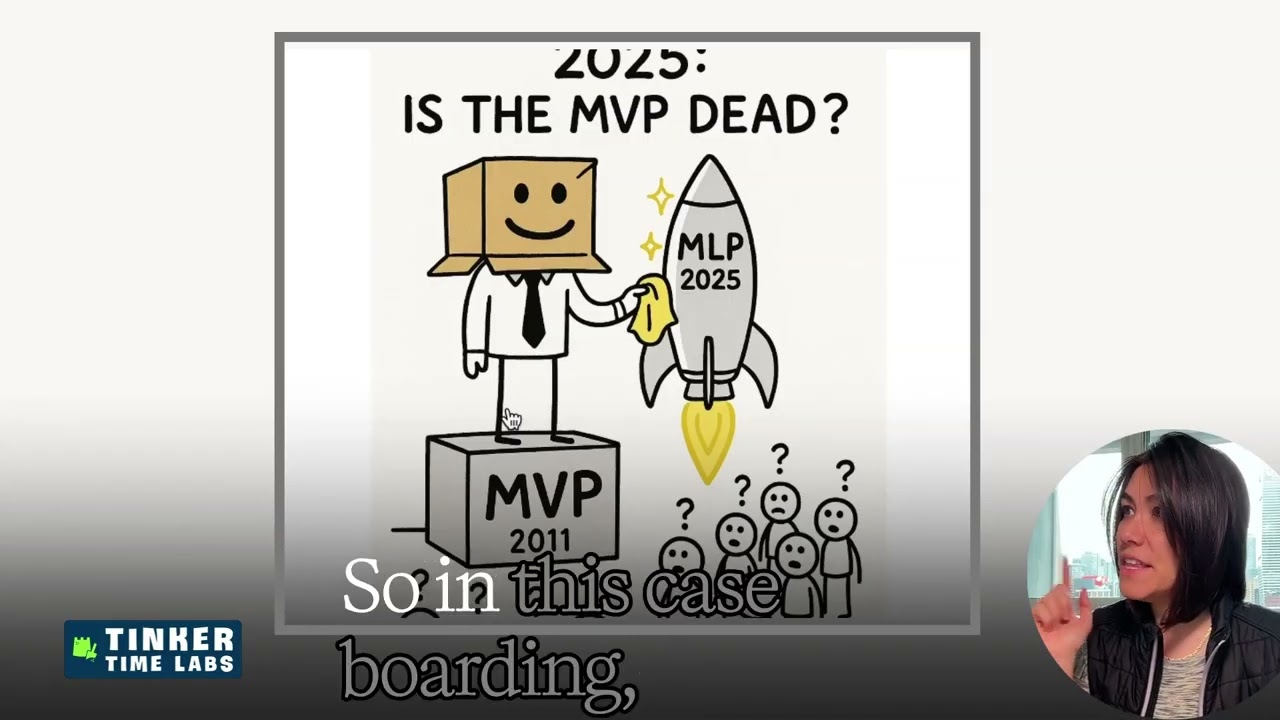
3. Stop obsessing over MVPs and test what really matters
A strong takeaway from this reflection is that building the smallest possible product is not enough if it does not actually prove the real use case. What matters is understanding the job to be done and making sure your first test includes the table-stakes features needed to validate whether customers can solve their problem in the real world.
4. Customer feedback is the real moat
This session reinforces a critical product truth: defensibility does not just come from having an idea. It comes from learning faster than everyone else. When you continuously put something in front of users, gather feedback, measure what matters, and iterate intentionally, you build stronger products and deeper customer intimacy over time.
KEY TAKEAWAYS:
AI is most useful when it helps leaders respond better, not just monitor more.
Human creativity, judgment, and empathy still matter most in an AI-enabled workflow.
A useful early product test must prove the real job to be done.
Table-stakes features cannot be skipped if they are essential to the user experience.
Fast learning loops and real customer feedback create long-term competitive advantage.