What the Future of Salesforce Field Service Looks Like Right Now
In this Office Hours Insight session, Leigh-Anne Nugent shares a grounded look at where Salesforce Field Service is headed from workforce pressure and connected assets to AI, asset lifecycle management, and smarter planning. It is a practical conversation about what service leaders and implementers need to rethink now if they want to build for scale, resilience, and real business value.
LESSONS YOU CAN TAKE FROM THIS:
1. Field service is becoming more strategic than ever
This session makes it clear that field service is no longer just about dispatching work. Rising demand, shrinking skilled labor, and higher customer expectations are forcing organizations to think bigger about service outcomes, technician enablement, and the role service plays in revenue, retention, and asset performance.
2. AI should multiply human work, not replace it
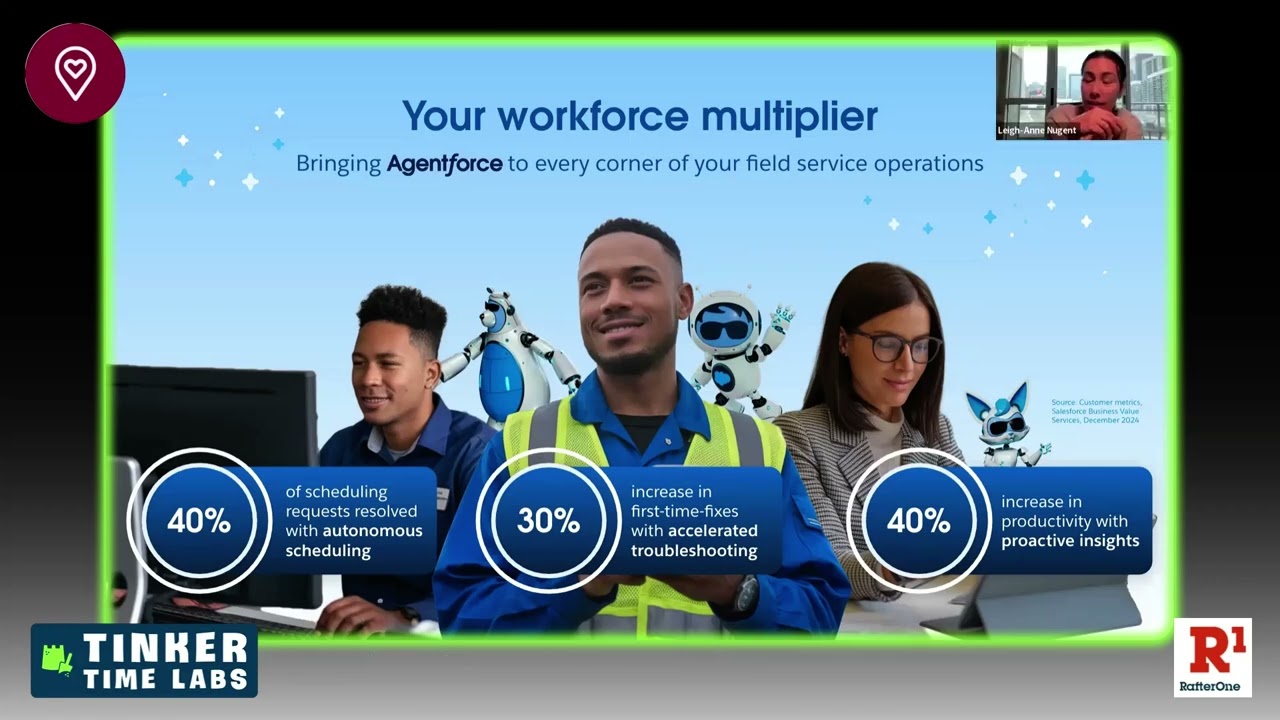
A strong theme in this discussion is that AI belongs alongside the workforce, not in competition with it. Leigh-Anne frames Agentforce and related capabilities as force multipliers—tools that help organizations close skill gaps, improve planning, and reduce repetitive work so people can focus on the moments that require judgment, expertise, and customer trust.
3. The biggest service gains often start upstream
One of the smartest ideas in this conversation is that better service does not always begin with a faster dispatch. Sometimes it starts earlier—at build time, startup time, or in how assets are connected and monitored. If a process upstream can eliminate a downstream truck roll, that is not just operational improvement. That is a strategic redesign of the service model.
4. Build closer to the product whenever possible
For implementers, one of the most practical takeaways is to avoid overbuilding when the platform roadmap is already moving. Leigh-Anne highlights the importance of understanding what Salesforce is investing in—from asset service lifecycle management to time sheets, capacity planning, and mobile improvements—so teams can reduce unnecessary customization and protect long-term ROI.
KEY TAKEAWAYS:
Field service is increasingly viewed as mission-critical, human-powered, and growth-enabling.
AI in service works best when it strengthens the workforce instead of trying to replace it.
Connected assets and smarter upstream design can reduce avoidable truck rolls.
Service leaders need to measure outcomes, not just activity.
Implementers should stay close to the product roadmap to avoid costly custom builds.