How to Get Started with Optimization in Salesforce Field Service
In this Office Hours Insight session, Leigh-Anne Nugent walks through what it really takes to get optimization working in Salesforce Field Service. This is not just a feature you switch on and hope for the best. It depends on strong reference data, clear scheduling logic, realistic testing, and a step-by-step approach that helps teams understand what the engine is actually doing before layering on more complexity.
LESSONS YOU CAN TAKE FROM THIS:
1. Optimization only works when the foundation is strong
Before optimization can deliver value, the basics need to be in place: territories, resources, scheduling policies, and well-structured work. If the reference data is incomplete or inconsistent, the engine has nothing reliable to work with. That is why strong setup around service appointments, due dates, skills, and territories matters so much before teams start optimizing at scale.
2. Start simple before adding more rules
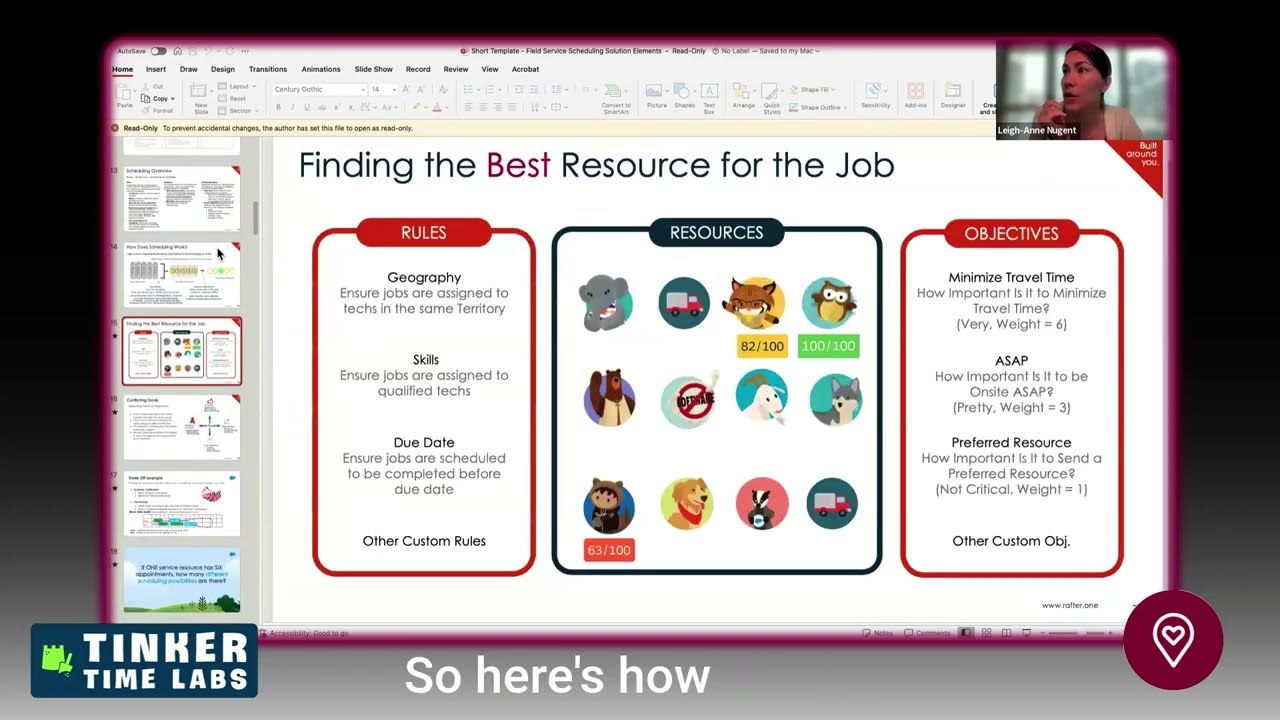
A major theme in this session is to think big, but build small. Optimization can consider drive time, priorities, work rules, service objectives, and many other constraints, but turning everything on at once makes it much harder to understand why something worked or failed. The smarter approach is to begin with simple policies, controlled test scenarios, and fewer variables so you can learn what the engine is doing.
3. Testing needs the right environment and the right data
Leigh-Anne makes a strong case for using a full sandbox whenever possible, especially for optimization testing. The quality of your data matters, and tools like the Field Service Data Generator can help create useful sample records quickly. But even then, teams still need to understand what is being generated, what data points are missing, and how those gaps can affect scheduling or optimization behavior.
4. Optimization is not magic, it is an experiment
One of the most useful insights in this session is that optimization is a learning process. Sometimes a service appointment will not schedule because of a due date in the past. Sometimes a rule will quietly block a result. Sometimes the job runs for a long time because it is processing more combinations than expected. That is why implementers need to test, inspect rule violations, understand the request scope, and work closely with dispatchers to translate system behavior into real operational decisions.
KEY TAKEAWAYS:
Optimization depends on strong setup for territories, resources, work, and policies.
The best rollout strategy is to start simple and add constraints gradually.
Full sandboxes and realistic sample data make testing much more effective.
Past due dates and missing reference data can quietly block scheduling results.
Optimization works best when teams treat it like an ongoing experiment, not a one-time setup task.