How to Turn Conference Notes and Discovery Chaos into Action with AI
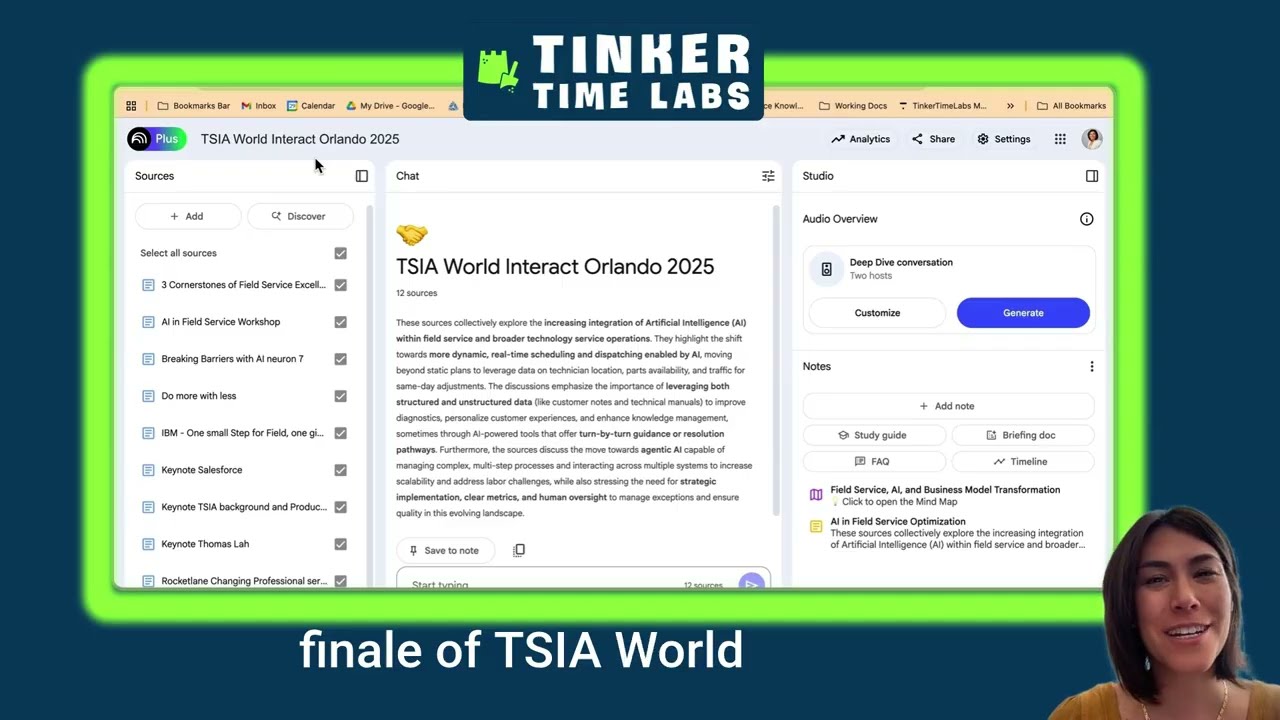
In this Office Hours Insight session, Leigh-Anne Nugent shares a real-time experiment with NotebookLM and a bigger idea behind it: AI should not just summarize information. It should help turn messy notes, discovery docs, conference takeaways, and client insights into something actionable. From field service trends at TSIA World Interact 2025 to practical knowledge management, this is a smart look at how AI can help teams think faster and work more strategically.
LESSONS YOU CAN TAKE FROM THIS:
1. Summaries are useful, but action is the real goal
Leigh-Anne makes an important distinction here: getting a recap of a session is not enough. The bigger opportunity is using AI to synthesize themes, surface risks, identify opportunities, and turn overwhelming documentation into next steps leaders can actually use.
2. A smart organization needs a smarter knowledge system
One of the strongest ideas in this session is the concept of creating a notebook for each client, project, or initiative. When notes, transcripts, websites, design documents, and research live in one structured place, AI becomes far more useful as a thinking partner instead of just a search tool.
3. AI works best when paired with good source material
This walkthrough also shows the limits of AI. If transcripts are messy or source data is unclear, the outputs can drift or mislabel important ideas. That is a practical reminder that better inputs lead to better insights, especially when the goal is executive readouts, tactical recommendations, or strategic synthesis.
4. The future of field service is connected, predictive, and outcome-focused
Beyond the NotebookLM experiment, the session surfaces bigger trends from TSIA: smart connected assets, reduced truck rolls, rising service demand, workforce shortages, and the shift from user-based pricing to value- and outcome-based models. The message is clear: leaders need better systems to interpret change and act on it quickly.
KEY TAKEAWAYS:
AI should help teams move from information overload to practical action.
Structured knowledge hubs can make client work more strategic and reusable.
Better source data leads to stronger AI outputs and more reliable insights.
Field service leaders are being pushed toward smarter, more predictive operating models.
Value realization and actionability are becoming more important than raw documentation.