What Salesforce Field Service Data Capture Fliction Reveals About Real-World Mobile Testing
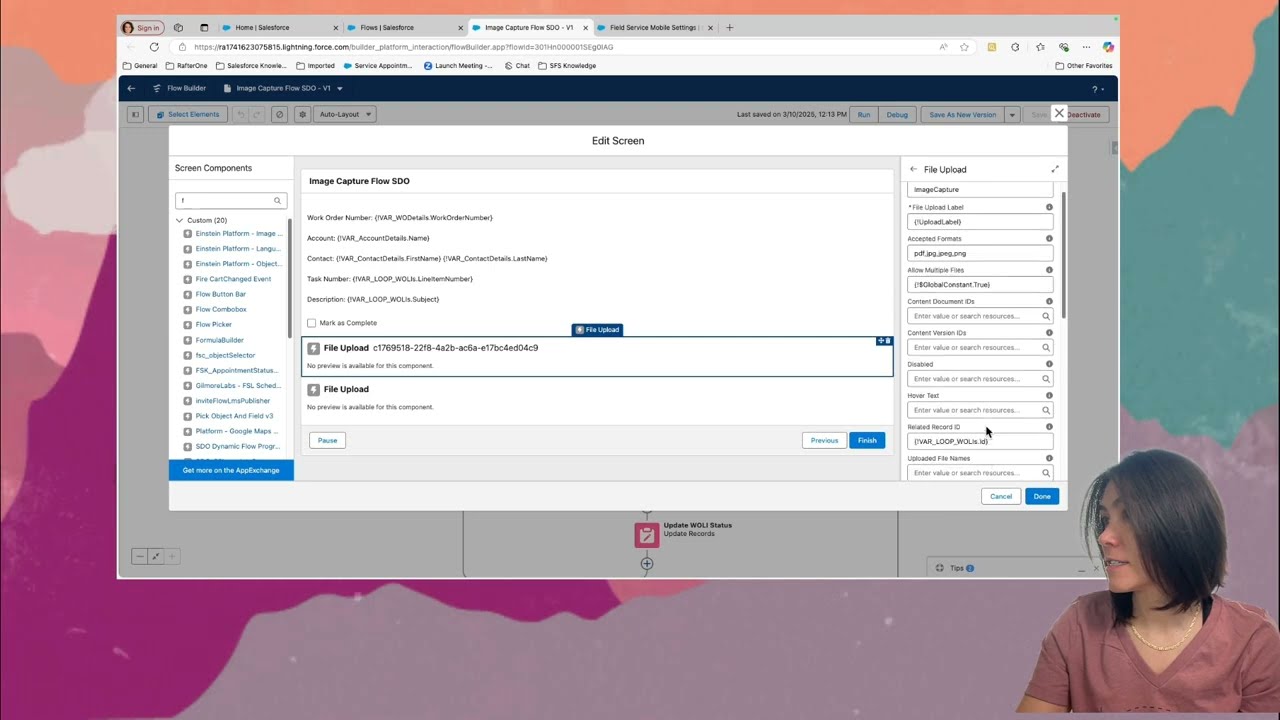
In this Office Hours Insight session, Leigh-Anne Nugent walks through hands-on testing of Salesforce Field Service data capture flows inside the mobile app. What starts as a feature exploration quickly becomes a deeper lesson in permissions, UX, record context, flow limitations, and the gap between a promising form experience and a fully working field process.
LESSONS YOU CAN TAKE FROM THIS:
1. New features can look polished before they are fully practical
The mobile data capture experience looks cleaner, sharper, and more user-friendly than older flow patterns. But good design is only part of the story. Real value depends on whether the form can save data correctly, update records as expected, and connect to the broader field service workflow.
2. Permissions and rollout strategy matter early
This session highlights an important implementation detail: access to data capture may depend on permission setup, including the Lightning SDK for Field Service Mobile. That makes pilot planning important. What works for a controlled test user may need a different approach when rolling out at scale.
3. Converting old mobile flows is not always straightforward
A big takeaway here is that legacy Field Service mobile flows do not simply map over to data capture flows. Loops, assignments, file handling, record updates, and certain logic patterns introduce friction fast. That means teams should expect redesign work, not just reuse.
4. A great form is not enough if the data model breaks down
The transcript repeatedly comes back to one critical question: where does the data actually go? A mobile experience can feel smooth, but if uploaded files do not persist, record updates fail, or service reports cannot use the captured data, the process still is not ready for production.
KEY TAKEAWAYS:
Data capture flows offer a cleaner mobile user experience.
Permissions and SDK settings can directly affect access and rollout.
Older Field Service mobile flows may need redesign, not conversion.
File uploads, record updates, and data persistence still need careful testing.
The real test of innovation is not how it looks, but how it performs in the field.