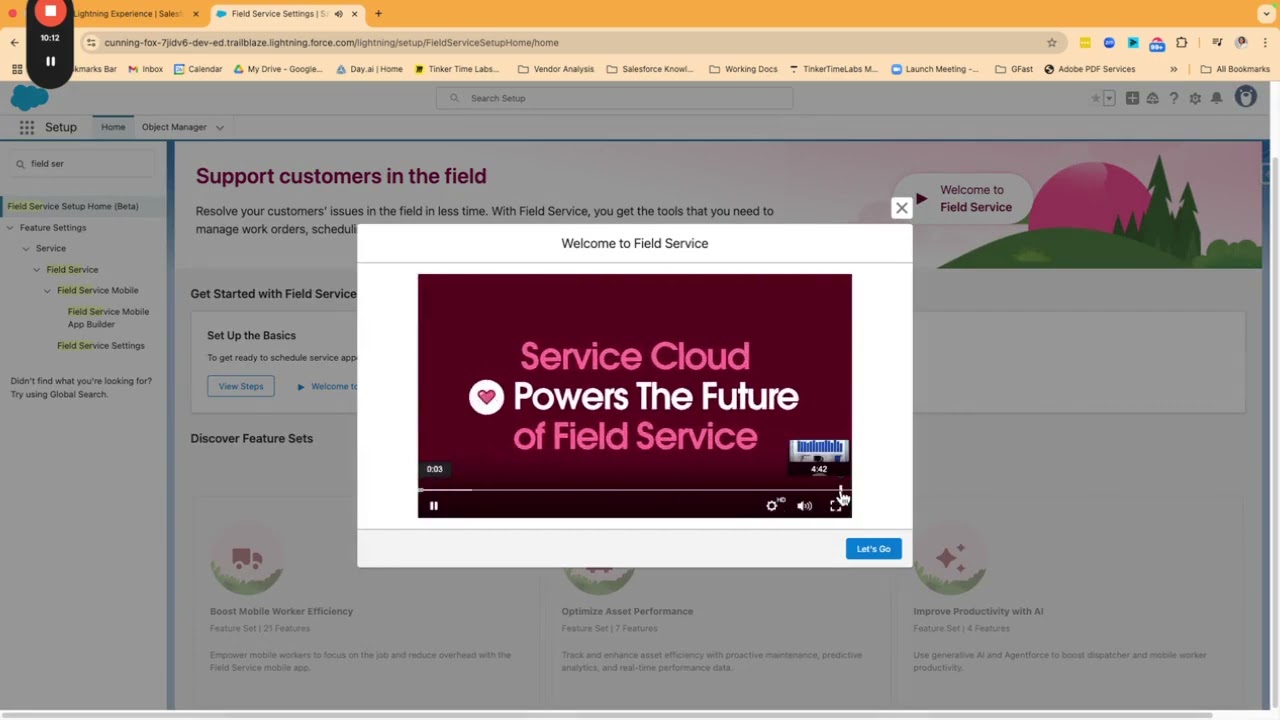
How to Set Up Salesforce Field Service Faster with the New Setup Menu
In this Office Hours Insight session, Leigh-Anne Nugent walks through Salesforce Field Service’s new setup menu and what it means for faster, smarter implementation. The conversation goes beyond clicks and configuration, it shows how a strong baseline setup helps teams speed up discovery, improve adoption, and move toward their first scheduled appointment with more clarity and less friction.
LESSONS YOU CAN TAKE FROM THIS:
1. A strong setup creates better discovery
Leigh-Anne shares why she builds the first 10% of a solution before deep discovery begins. It helps clients see the product in action, learn the language faster, and stay focused on the real end-user experience instead of getting lost in the tool itself.
2. The new setup menu helps reduce early-stage complexity
The new Salesforce Field Service setup experience brings many foundational tasks into one guided flow. That matters because the first phase of setup can be overwhelming, and a more structured onboarding path helps teams create a stable base faster.
3. Baseline configuration still matters
Even with a better setup experience, the essentials still count: understanding licenses, creating the right user profiles, enabling key settings, and validating permissions. These foundational steps are what make later scheduling, technician workflows, and mobile experiences actually work.
4. Time-to-value improves when you focus on what gets the first appointment out
The goal is not to configure everything at once. The goal is to set up enough of the platform to get to a first scheduled appointment that can flow to the mobile app. That kind of focused implementation keeps momentum high and helps teams learn by doing.
KEY TAKEAWAYS:
The new Salesforce Field Service setup menu simplifies early implementation steps.
Building a small working foundation first can improve discovery and adoption.
Licenses, profiles, permissions, and app setup are critical to a clean rollout.
Feed tracking and geocoding rules support notifications and travel calculations.
Faster setup is valuable when it is tied to real operational outcomes.