What It Really Takes to Implement Salesforce Field Service Well
In this Office Hours Insight session, Leigh-Anne Nugent breaks down a truth many teams discover the hard way: implementing Salesforce Field Service is not just about turning features on. It is about making smart setup decisions early—around work types, territories, service resources, and inventory—so the platform can support real operations instead of creating avoidable friction later.
LESSONS YOU CAN TAKE FROM THIS:
1. Fast setup still needs thoughtful design
The newer setup experience can speed up foundational configuration, but it does not remove the need for good implementation judgment. Teams still have to think through how work types, skills, service territories, and user setup should be modeled based on the business they are trying to support.
2. Work types are simple on the surface, complex underneath
A work type is never just a label. Duration, equipment type, maintenance plans, billing logic, self-service scenarios, and technician skill requirements can all affect how work types should be designed. Early demo data can help teams visualize what is possible, but real implementation requires more intentional structure.
3. Time zones and territory design can create hidden problems
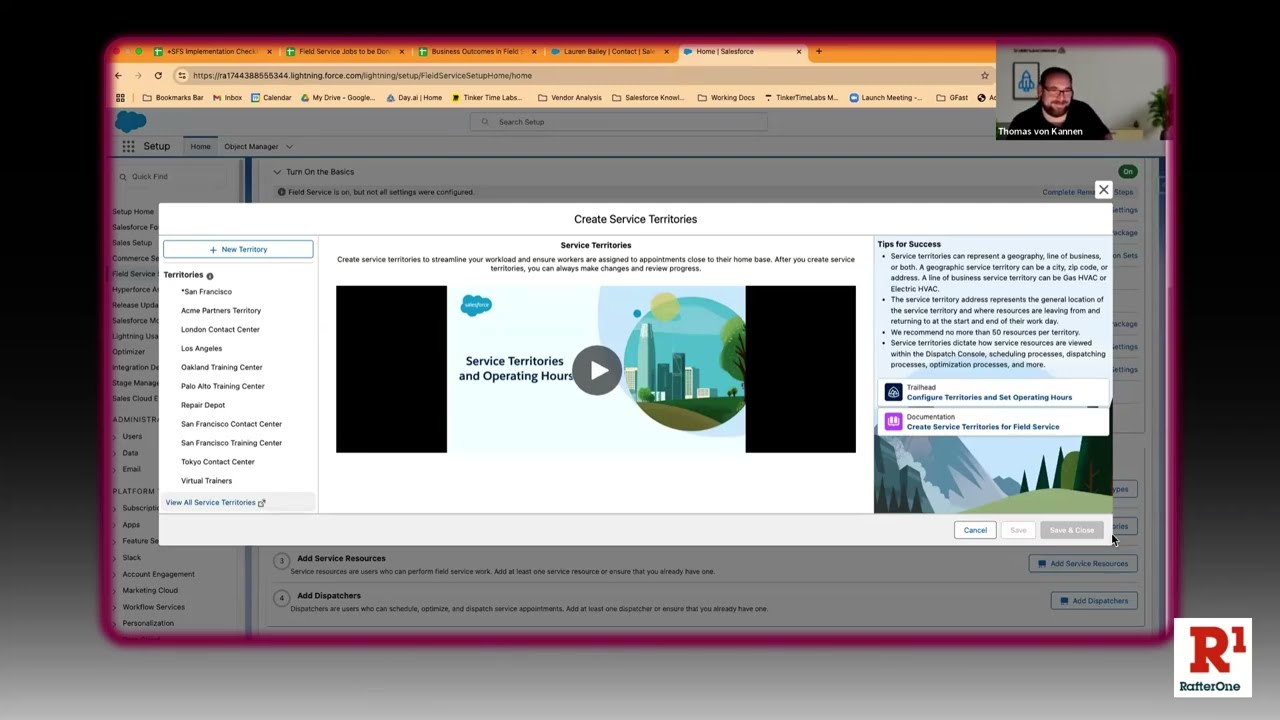
Service territories are one of those setup areas that seem straightforward until scheduling starts crossing regions. This conversation highlights a major real-world challenge: territory operating hours and time zones directly affect how appointments are booked and presented. If that foundation is wrong, dispatchers and customers feel the pain fast.
4. Inventory is not a small add-on
Inventory often looks like a basic extension of field service, but this session makes clear that it carries its own operational complexity. Locations, products, product items, layouts, transfers, required products, mobile behavior, and source-of-truth decisions all need to be considered before teams treat it like a quick feature to switch on.
KEY TAKEAWAYS:
A quick setup wizard can accelerate implementation, but it does not replace solution design.
Work types need to reflect real operational logic, not just generic labels.
Time zone strategy matters more than most teams expect in field service scheduling.
Service resource setup still depends on permissions, territory assignment, and clean reference data.
Inventory should be approached as an operational process, not just a product feature.