Why Smart Builders Don’t Build Everything from Scratch
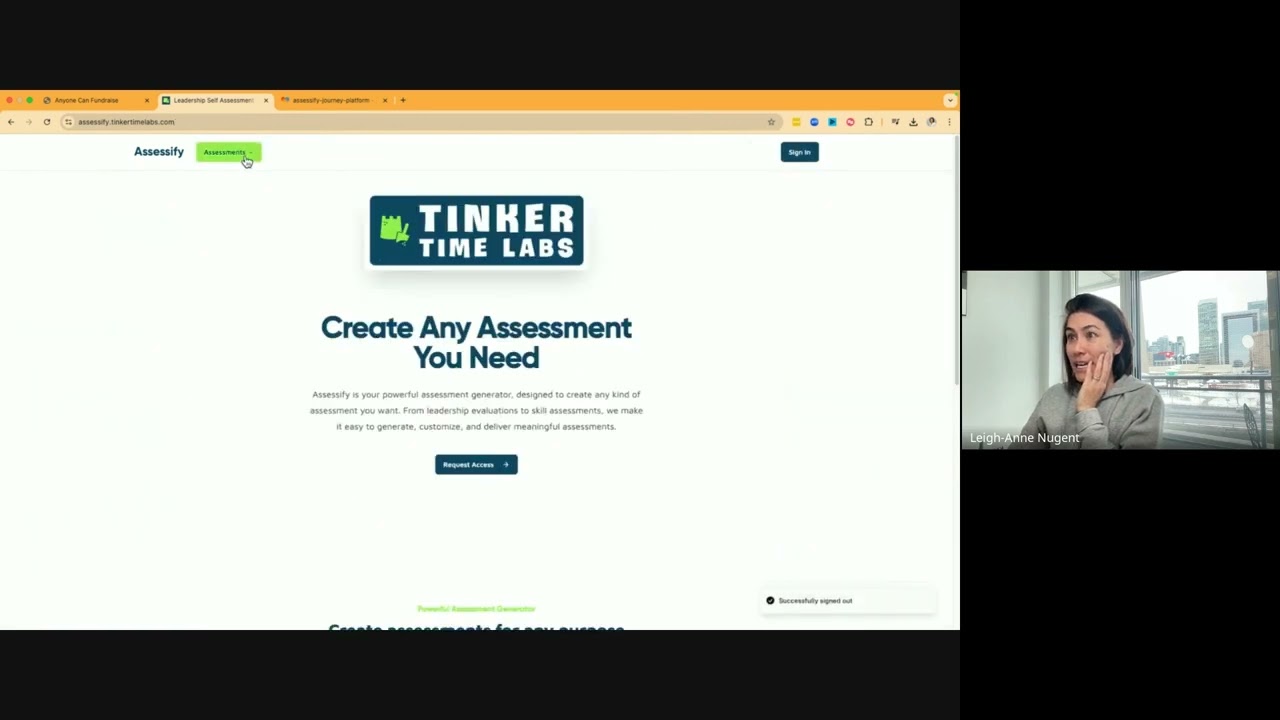
In this Tinker Club conversation, Leigh-Anne Nugent and Micah share what it really looks like to build in public: fixing bugs, improving the user journey, managing feature temptation, and realizing that sometimes the smartest move is to integrate instead of build. It’s a practical look at how innovation actually happens, messy, iterative, and full of better decisions along the way.
LESSONS YOU CAN TAKE FROM THIS:
1. User experience is shaped by small details
One of the biggest lessons in this conversation is that even strong ideas can lose momentum if the user journey feels confusing or too heavy. Simple changes, like clearer progress indicators, shorter intros, and better visibility into what comes next, can make a tool feel more usable and more human.
2. Building in progress means solving one layer at a time
The transcript shows how quickly one fix can uncover another issue. Guest access, registered-user flow, saved results, and creator visibility all introduced different bugs and edge cases. That is the reality of building something real: progress is not always linear, but every solved problem strengthens the foundation.
3. Integration can be more powerful than reinvention
A key mindset shift in this episode is the idea that not every capability needs to be custom-built. By embedding existing tools and thinking more strategically about integrations, builders can move faster, reduce complexity, and focus their energy on the parts that create unique value.
4. Documentation is part of innovation, too
There comes a point where progress is no longer about adding more features. It becomes about locking down bugs, organizing a backlog, documenting what exists, and getting ready for real feedback from users. That shift is what helps a project move from tinkering to traction.
KEY TAKEAWAYS:
Great user experience often comes down to clarity, not complexity.
Bugs are part of the process, especially when multiple user types are involved.
You do not need to build every feature yourself to create a valuable product.
Integrations can unlock speed, flexibility, and better use of resources.
Documentation and focus are what turn progress into momentum.