Why Asset-Centric Field Service Changes How Teams Think About Service
In this Office Hours Insight session, Leigh-Anne Nugent explores three connected ideas that matter more than most teams realize: what Asset Service Lifecycle actually includes, how work plans can extend into a partner community experience, and why first-time fix rate should be treated as a business outcome, not just a service metric. The bigger message is that field service is moving beyond dispatch alone and toward a more connected, asset-aware model of service delivery.
LESSONS YOU CAN TAKE FROM THIS:
1. Asset Service Lifecycle is bigger than a service add-on
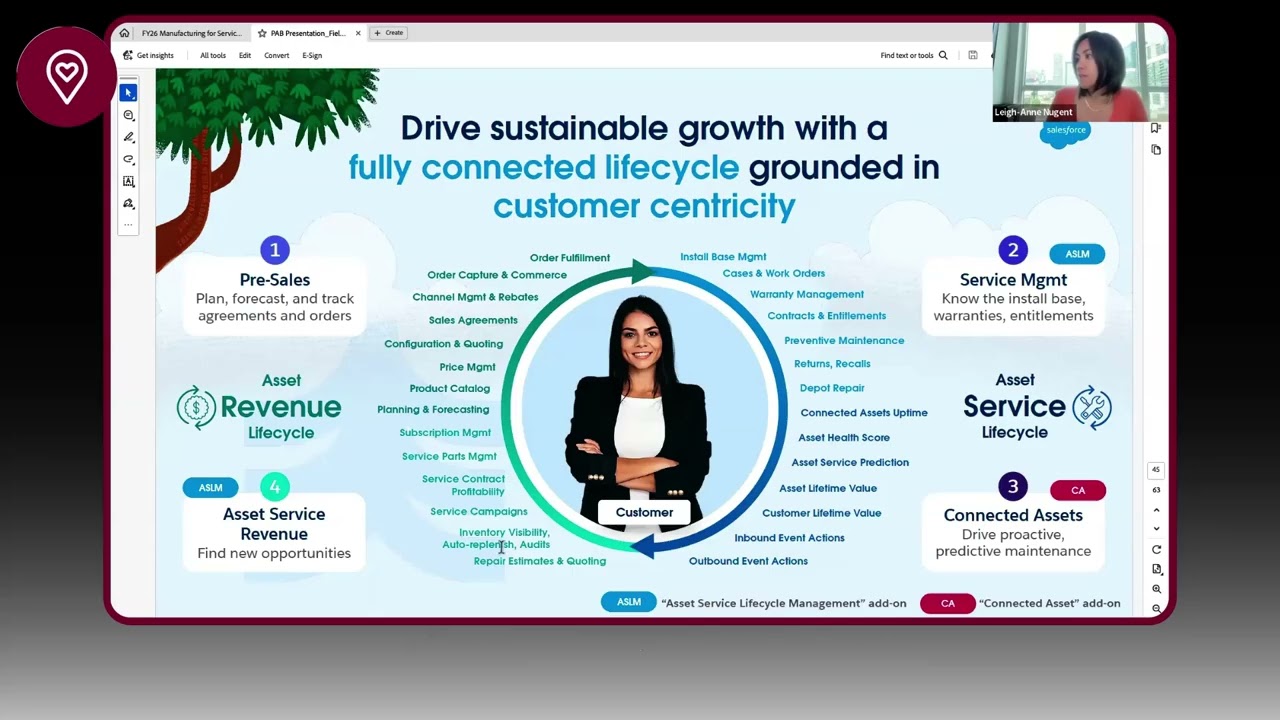
A major takeaway from this session is that Asset Service Lifecycle is not just a nicer asset page. It brings together multiple capabilities around service management, connected assets, warranties, pricing, and asset service revenue. That matters because it shifts the conversation from “how do we dispatch work?” to “how do we understand, protect, and grow value from the asset over time?”
2. Connected asset thinking starts with the right data, not just the right screen
Leigh-Anne shows that the UI is attractive, but the real work is underneath it. Asset health, thresholds, alerts, and performance metrics only become useful when the underlying data model is structured properly and the right signals are flowing in. That makes connected service less about pretty dashboards and more about deciding what data points matter, where they come from, and what should happen when something crosses a threshold.
3. Work plans can support broader service experiences than the mobile app alone
Another important insight is that work plans are not only a mobile technician tool. There is clear value in exploring how work plans and work steps could be surfaced in a partner community so external teams or contractors can work through defined steps in a more structured way. That opens up interesting possibilities for shared process execution beyond just internal field teams.
4. First-time fix rate should be tied to outcomes, not just reporting
The discussion around first-time fix rate points to a more strategic mindset: it is not enough to measure a KPI after the fact. Teams should work backward from the outcome they want, asset uptime, lower truck rolls, faster repair cycles, longer asset life, and design the service model to support it. That is where field service starts becoming an outcomes-based function instead of just an operational one.
KEY TAKEAWAYS:
Asset Service Lifecycle combines service, pricing, warranties, connected assets, and revenue thinking.
Asset health and threshold monitoring are only as useful as the data feeding them.
Work plans may have value beyond mobile, especially in partner or contractor experiences.
First-time fix rate should be treated as an operational outcome to design for, not just a number to report.
The bigger opportunity is to reduce truck rolls, extend asset life, and create more proactive service models.