Why Field Service Leaders Need a Stronger Foundation Before They Optimize
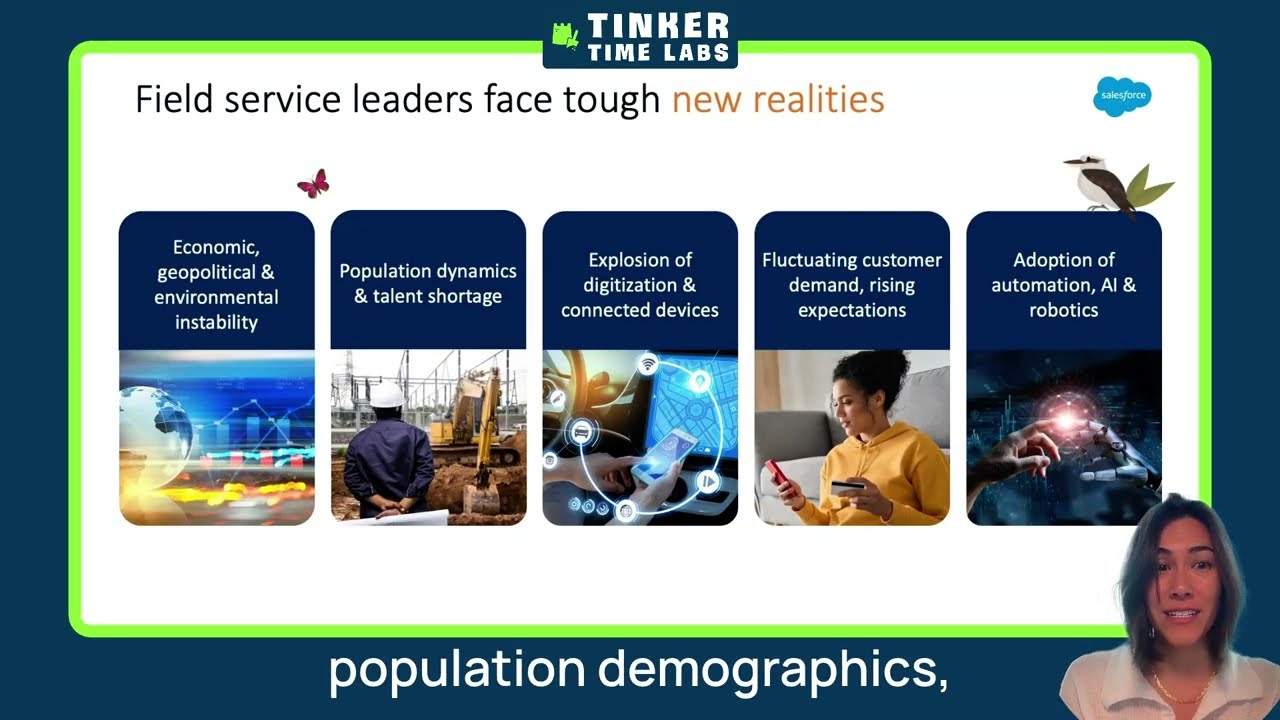
In this Office Hours Insight session, Leigh-Anne Nugent speaks directly to the pressure field service leaders are under right now, from labor shortages and rising customer expectations to automation, AI, and constant disruption. Her message is clear: if you want to become a more intelligent, resilient service organization, you cannot skip the foundation. You need to understand where you are, strengthen your scheduling and service model, and build toward optimization in the right order.
LESSONS YOU CAN TAKE FROM THIS:
1. Optimization only works when the foundation is strong
A lot of organizations want to jump straight to AI, automation, and optimization. But if scheduling is still happening in Outlook, Excel, or manual drag-and-drop workflows, the business is not ready for that leap yet. The first step is understanding how work is currently being planned, assigned, and executed.
2. Field service transformation is bigger than dispatch
This session makes it clear that true service transformation touches much more than scheduling. Asset strategy, work execution, customer communication, and self-service all play a role. If one of those areas is weak, it slows down the entire service operation and makes it harder to scale intelligently.
3. Self-service depends on the right operational design
One of the most practical insights here is that many businesses want customers to self-schedule service, but they cannot support it yet because the internal systems are not stable enough. That is not a technology problem first. It is a foundation problem. The business needs clean scheduling rules, reliable availability, and a clearer service model before self-service can work well.
4. Sustainable transformation happens in phases
Leigh-Anne positions the master class around a phased journey: foundation first, then automation, then optimization, then intelligent service. That progression matters. It helps organizations move faster without creating chaos, and it gives leaders a more realistic path toward long-term transformation.
KEY TAKEAWAYS:
Field service leaders are dealing with workforce, customer, and technology pressure all at once.
Optimization should come after the business has fixed its core scheduling and service foundation.
Service transformation includes assets, execution, communication, and self-service.
Self-scheduling only works when the internal service model is ready for it.
A phased approach creates a faster and more sustainable path to intelligent service.