What Salesforce Field Service Really Covers and Why the Domain Matters
In this Office Hours Insight session, Leigh-Anne Nugent breaks down the field service domain in a way that makes it easy to understand, especially for people coming from a traditional Salesforce Sales Cloud or Service Cloud background. This is a practical look at what field service actually is, why it spans so many industries, and what makes the work, the workforce, and the technology behind it so uniquely complex.
LESSONS YOU CAN TAKE FROM THIS:
1. Field service is about solving problems onsite
Field service starts where remote support ends. Instead of answering a case over the phone or through self-service, a real person has to go to a customer location to install, repair, inspect, train, replace, or upgrade something. That physical, onsite nature changes everything, from scheduling and routing to customer expectations and workforce planning.
2. The domain is broader than most people think
One of the biggest insights in this session is that field service is not tied to one industry. It shows up in telecom, utilities, HVAC, construction, manufacturing, medical devices, painting, internet installation, and more. The industry details may change, but the same core elements show up over and over again: customers, assets, workers, jobs, and service experience.
3. Scheduling is only the visible part of a much bigger system
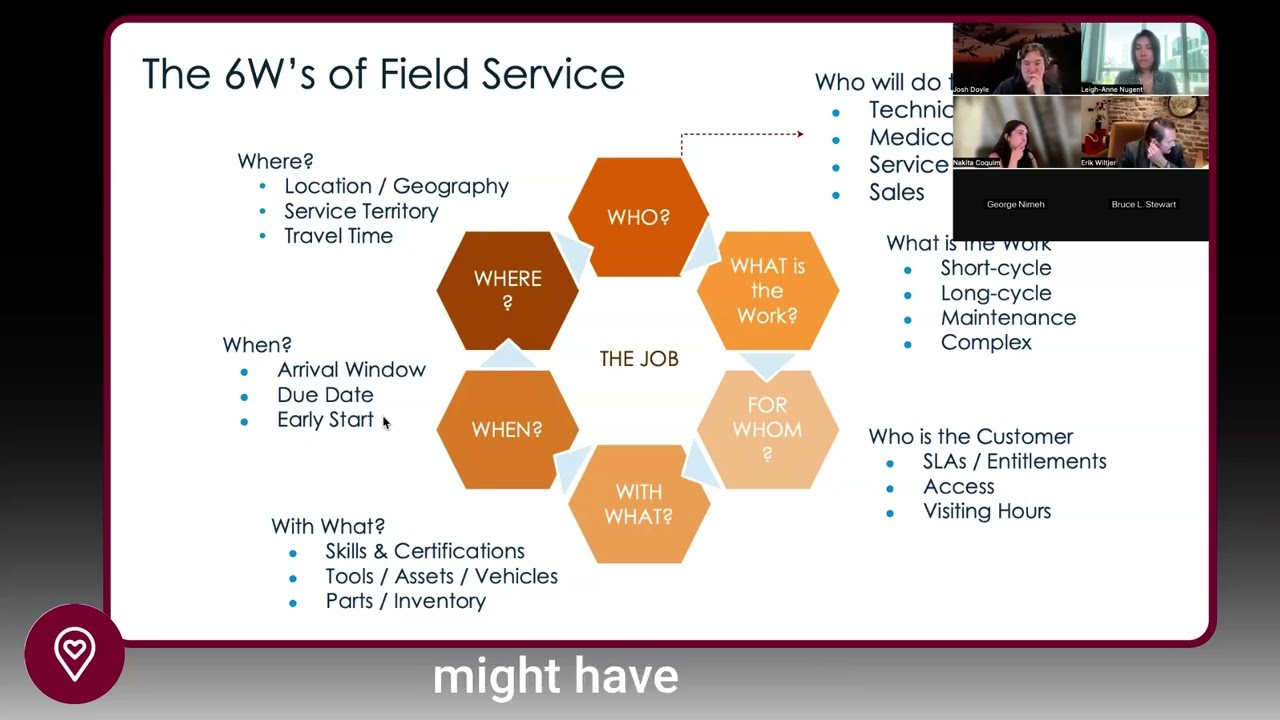
What looks simple from the outside is actually a complex mix of people, data, time, geography, skills, and business rules. To assign the right person to the right job, teams need to know who can do the work, what the work is, where it needs to happen, when it is due, and what tools or certifications are required. That is why field service systems can feel like a major leap from a basic CRM setup.
4. The future of field service is proactive and connected
Leigh-Anne points to where the space is heading: connected assets, automated service triggers, preventative maintenance, service contracts, and more predictive support models. The organizations that move from reactive firefighting to proactive service delivery will be the ones that improve uptime, reduce truck rolls, and create stronger customer relationships.
KEY TAKEAWAYS:
Field service is the business of performing work at a customer site.
The same service model appears across many very different industries.
Great scheduling depends on accurate data about work, people, assets, and timing.
Workforce shortages and operational complexity make field service hard to run well.
Connected assets and proactive service models are shaping the future of the industry.